How we work

Technologies / C#
We build C# applications for companies that already have
engineering teams and need more capacity, or companies
modernising older systems that have started to slow them down.
Most of our C# work sits in two places: B2B platforms with
complex integrations, and enterprise tools that have to keep
running while we change them.
Trusted by




OUR SERVICES
Companies hire us for C# work for different reasons. Some need extra hands on an existing roadmap. Others have a specific build in mind. A few want us to take an aging internal system and make it usable again.
We handle all three. Here’s what that looks like in practice.
We build web apps, internal tools, and backend services in C# for companies that need them to fit into an existing environment, not stand alone.
A recent example: an intranet portal with ADFS single sign-on for Windows users, SharePoint based document management, news, and user profiles. It plugs into the client’s existing identity setup so employees don’t get a separate login to remember.
Most of our custom C# work looks like this. Code that has to live inside someone’s existing infrastructure and behave itself.
C# applications rarely live alone. They talk to an ERP, a CRM, a warehouse system, a payment provider, or all four. We build the connections and keep them stable.
Recent work: a cloud-based application synced in real time with the client’s ERP, so stock, orders, and customer data stayed consistent across both systems without nightly batch jobs.
We also handle migrations. Moving an on-premise C# application to the cloud, splitting a monolith into services, or porting from an older framework. The goal is the same in every case: nothing breaks on the way over.
We build C# applications that run on Azure and AWS, depending on what the client already uses. SaaS products, internal platforms, document-heavy systems, IoT backends.
One recent build manages product safety information for an industrial client. Documents are stored and processed on AWS. The C# layer handles the business logic, access control, and reporting.
We don’t push cloud as a default. If your application doesn’t need it, we’ll say so. When it does, we use the services that fit the workload, not the ones that look good in a case study.
BENEFITS
The tech
Our C# work runs on current .NET versions, so projects stay on supported runtimes and don’t accumulate upgrade debt before they ship.
We write code that the next developer can read without calling us. SOLID, DRY, YAGNI, KISS. The discipline that makes handovers painless and audits short.
ASP.NET Core is what we reach for when a C# application needs to be fast, run cross-platform, and not be a pain to deploy.
For structured data, transactions, and reporting that has to be right, we use relational databases. We pick the engine based on what your infrastructure already runs.
We build APIs that other teams can actually integrate with. Documented, versioned, and consistent across endpoints.
ORMs save time, until they don’t. We use EF Core by default and drop to Dapper or raw SQL when performance needs it.
NoSQL when the data is unstructured, the volume is high, or the access pattern doesn’t fit a relational model. Not because it’s trendy.
WORK MODELS
You have a team. You need specific skills. Our developers slot in and get to work, no restructuring required.
You need a full team but want to stay in the driving seat. We build the team around your product owner and process.
You have a product to build and no bandwidth to manage the process. We own it end-to-end and deliver.
PROCESS
OUR LEADERSHIP TEAM
No discovery decks, no SDR call, no scripted pitch. Just a conversation about what you’re trying to build and whether we’re the right people to build it. Get in touch and let’s figure it out.



FAQ
C# is most often used for backend services, enterprise applications, internal tools, and web APIs. It runs on
Windows, Linux, and macOS through .NET, so it shows up in everything from e-commerce backends to industrial software to SaaS products.
Microsoft maintains it, which is why most large organisations with Microsoft infrastructure default to C# for serious internal builds.
C# makes sense when you’re building something that has to integrate with Microsoft infrastructure, when your team already has C# skills you want to keep using, or when you need a strongly typed language for a system that will grow past a few thousand lines.
It’s a poor fit for quick scripts, lightweight prototypes, or projects where the team is fluent in another stack. We’ll tell you if we think your project belongs somewhere else.
C# is the language. .NET is the platform it runs on.
You write code in C#. The .NET runtime executes it, the .NET framework gives you the standard libraries, and tools like ASP.NET Core sit on top for building web applications. You’ll see job postings ask for both, but in practice they go together.
Week one is onboarding: codebase access, introductions, aligning on tools and communication. Week two the team is already delivering. We don’t spend a month in workshops before writing a line of code.
Both. Fixed price works when the scope is well-defined and unlikely to change. Time and materials works better for product development where requirements evolve. We’ll tell you which one fits your situation, not which one is easier for us.
Three honest reasons.
We’ve shipped C# work for B2B platforms, manufacturing systems, and internal tools across a decade. So we’ve seen what breaks at scale.
We work as part of your team, in your repo, on your sprint cadence. Not as a black-box vendor that disappears
after delivery.
And we’re based in Sweden and Bosnia, so you get European working hours, GDPR-aligned data handling, and rates that don’t match Sweden consulting prices.
Directly to the developers building your product. We don’t put account managers between you and the team. You’ll have a technical lead as your main point of contact, with full access to everyone else on Slack or whatever tool you use.
Yes. Most engagements scale as the project grows. We’ve structured teams from a single developer up to full dedicated teams for the same client. The model adapts to where you are in the project lifecycle.
Two weeks is typical from signed contract to a developer in your standup. Faster if we already have someone matched. Slower if your project needs a specific industry background or security clearance.
We don’t bench-warm developers, so we won’t promise next week. We’ll give you a real date based on who’s available
and what you need.
Yes. We offer three engagement models: staff augmentation for extending your team, dedicated teams for ongoing work, and full project ownership when you want us to handle
delivery end to end.
Part-time arrangements work for staff augmentation. For dedicated teams and full projects, we recommend full-time
allocation because context-switching kills productivity on complex codebases.
During the project, you work directly with the developers building your software. No account managers between you and the code. Weekly demos, shared sprint boards, and direct Slack access.
After launch, we offer maintenance, bug fixes, and feature additions under a separate support agreement. If you’d rather take it in-house, we hand over clean documentation and the full repository. Your code, your repo, from day one.
Yes. For staff augmentation and dedicated teams, you interview candidates the same way you’d interview an in-house hire. Technical screens, pair programming, culture fit, whatever your process requires.
Clients about us

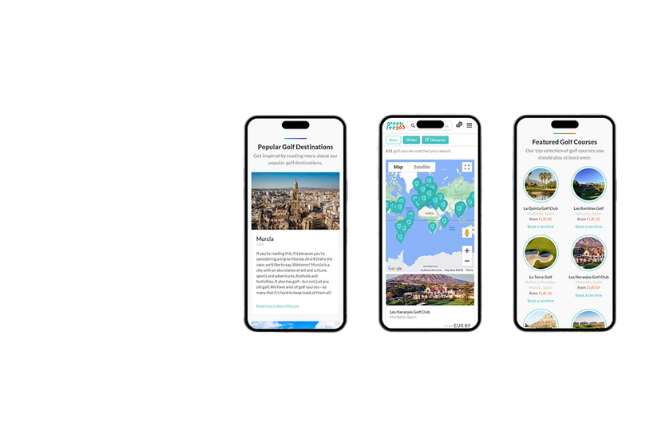
We needed a tech partner who could help us scale Greenfee365 into the global marketplace, and Zendev exceeded our expectations.
Their team developed custom solutions that optimized our booking platform, resulting in faster load times and an improved user experience

Zendev provided the solution we needed. Implementing Progressive Web App (PWA) significantly improved our site speed, Google rankings, and conversion rates. The new platform has driven a 33% increase in revenue and 17% more users.

Given a very tight timeframe, we are satisfied with having a user-friendly app that we now hope to further develop and refine.
We are pleased with the collaboration with Zendev and our contact person Aida, who has been very available, helpful, and quick. Thank you!

We struggled with outdated AutoCAD renders and no good way to manage large-scale 3D scans. Zendev solved both.

The PDT app was our first big step into the digital world using apps and Cloud solutions. By implementing this app, we could, with one tool, solve multiple issues that we had with our delivery process of new machines to our customers. The app helps us improve the machine quality, shorten our lead time and increase our cash flow.

Zendev understood our vision of connecting women with the right therapists. They improved the platform, were easy to collaborate with, and meeting them in person built real trust.