







Your factory knowledge is about to retire + 7 trends shaping manufacturing in 2026

manufacturing trends 2026

Trusted by startups and enterprises:


Your MES talks to your ERP like two strangers at a party. Your shop floor runs on spreadsheets. Your best machinist is 58 and retiring in three years.


Welcome to European manufacturing in 2026.


44% of machinists are 56 or older. 45% of engineers. 40% of plant managers. When they walk out the door, they take decades of know-how with them. The small fixes that keep machines running. The checks nobody wrote down. The workarounds that became standard practice.


Knowledge transfer failures cost large businesses €44 million per year. Most manufacturers have no plan to capture what's in people's heads before it's gone.


We spent months researching the real state of Nordic and European manufacturing. Not the conference slide version. The version plant managers and CTOs deal with every Monday morning.


The skills crisis is just the starting point. Here's what else we found.

 

1. Sweden's manufacturing skills crisis isn't coming. It's here.


Sweden faces a shortage of 70,000 workers across various sectors. The Hays Global Skills Index rates Swedish talent shortage pressure at 10.0 out of 10. Maximum score.


Across European manufacturing, 63% report significant shortages in mechanical and industrial engineering. That jumped 20% from 2023. Electrical engineering shortages hit 54%. Production operations gaps affect 47%.
45% of executives are already turning down business because they can't find people. 20.6% of plants that failed to reach full capacity cited labor shortage as the constraint.


The irony? The skills in highest demand: automation control (63.6%), robotics programming (60.6%), IoT integration (45.5%), are the same skills needed to solve the labor shortage through automation. Companies can't automate because they can't hire the people who build automation.


Replacing a skilled operator costs €9,400-€38,000. Multiply that by 40%+ annual turnover in some manufacturing sectors. The projected economic loss from unfilled manufacturing jobs: €940 billion by 2030.


So what do you do? You capture knowledge before it leaves. You build digital workflows and tools that hold process steps, checks, and machine-specific fixes. New staff learn faster. Teams stay consistent. The know-how stays in the building.


This isn't a product you buy. It's custom software shaped around your actual production processes. Digital checklists connected to your MES. Step-by-step guides linked to specific machine models. Forms that feed data straight into your quality system instead of sitting in a binder.


2. Your data is stuck in silos. It costs €26,000 per employee.


Employees lose 30% of their weekly hours chasing data across disconnected systems. That's 12 hours per week per person searching for information trapped in separate tools.


Do the math for a 100-person operation. 1,200 hours weekly. Thirty full-time employees doing nothing but finding data.
ERP implementations were supposed to fix this. They often made it worse. The failure rate for discrete manufacturing ERP projects sits at 73%. Most exceed budget by 3-4x. And 51% of companies experience operational disruptions at go-live.
Manual workarounds fill the gaps. Work orders (34.4%), purchase orders (32%), and sales orders (30%) remain the most manually processed documents in manufacturing.


Only 6% of businesses have full supply chain visibility. Nordic automotive suppliers face this daily. Their OEM customers demand real-time data and component-level traceability. Most can't deliver it because their systems weren't built to talk to each other.


This is where custom software fills the gap. Off-the-shelf tools rarely connect a 2008 MES to a modern cloud ERP without heavy modification. Someone has to build the middleware, the APIs, the data pipelines that make information flow between systems that were never designed to work together.


3. Unplanned downtime costs €1.4 trillion per year


That number comes from Senseye, a Siemens company. Fortune Global 500 manufacturers. The average large plant loses €238 million annually. Twenty-five incidents per month. Twenty-seven hours of lost production each time.
Per-hour costs by sector:

  • Automotive: €2.2 million per hour, €36,000 per minute
  • Mining and metals: €170,000 per incident average
  • General manufacturing median: €118,000 per hour

These costs doubled since 2019. Automotive jumped 113%. Mining and metals saw a 319% increase.
The fix exists. Predictive maintenance works. 95% of manufacturers who deploy it report positive ROI. Typical results: 30-50% downtime reduction within 6-12 months.


BUT only 40% of manufacturers use it today. 21% still run equipment until it breaks.


What blocks adoption? Legacy system integration. 70-85% of predictive maintenance projects struggle to connect with existing MES, ERP, and SCADA systems. The technology works fine. Getting it to talk to a 15-year-old production system is the real project.


This is integration work. Not buying another platform. Building custom connectors between your sensor network, your production systems, and your business tools. The kind of work that falls between what your equipment vendor offers and what your ERP provider supports.


4. 70% have piloted digital twins. Fewer than 15% use them daily.


Digital twins are the poster child for "stuck in pilot." The market hit $13.6-17.7 billion in 2024. Manufacturing holds the largest share at 35.8%. And 64% of projects never move beyond the pilot phase.


When they reach production, results are real. Siemens Energy pushed OEE from 65% to 85%. Their Amberg factory hit 99.9988% quality. Volkswagen cut development time by 30% and saved €50 million annually through crash simulation.
The barrier isn't ambition. It's plumbing.


Most factories run hybrid environments. Early 2000s equipment next to modern cloud applications. Getting clean, time-synchronized data flowing from PLCs to MES to ERP requires infrastructure work nobody budgeted for.


The pattern repeats across every section of this article. The technology exists. The software to connect it to your reality doesn't come in a box. It has to be built.


5. Manufacturing is the #1 ransomware target. Four years running.


Attacks on industrial sectors spiked 87% year-over-year in 2024. The average ransomware incident in manufacturing costs €8.2 million. Over seven years, ransomware caused an estimated €16 billion in manufacturing downtime costs.


75% of OT attacks begin as IT breaches. 43% of major attacks hit Level 4 (the corporate layer where ERP and MES connect IT to operations). Every integration point between business systems and the shop floor is a potential entry point.


Only 19% of manufacturers have advanced IT/OT security. Just 26% are prepared to address the cultural divide between IT and OT teams. These teams historically operated in separate worlds. Now their systems are connected. Their security practices aren't.


6. What's actually working vs. what's still hype


After reviewing hundreds of data points, here's an honest breakdown.
 

Delivering real ROI right now:
Predictive maintenance, machine vision quality inspection (97%+ defect detection vs. 85-90% traditional), and collaborative robots all show 6-12 month payback periods. ABB's Genix platform delivered 25% energy efficiency gains. These aren't pilots. They're production systems.


Stuck between demo and deployment:
AI agents sound exciting. Only 6% have adopted them. Gartner predicts 40%+ of agentic AI projects will be canceled by 2027. Generative design delivers proven results - NASA hit 50% mass reduction, GM made parts 40% lighter, but $7,000-45,000 annual licensing keeps SMEs locked out. Industrial AR worked at Boeing and Fujitsu. Then Microsoft killed HoloLens 2.
 

The four reasons most manufacturing tech projects fail:

  1. Data quality: 85% of AI projects fail here
  2. Legacy integration: failed integrations cost $2.5 million average
  3. Skills gaps: 87% of organizations affected
  4. Unrealistic expectations:  98.8% of Fortune 1000 invest in data initiatives, only 37.8% achieved data-driven operations


7. One trend worth watching: Industry 5.0 in the Nordics


Sweden runs 274-300 robots per 10,000 manufacturing employees. The global average is 113. And 80% of Swedes view robots positively: the highest rate in Europe.

The reason is structural. Collective bargaining covers ~90% of Swedish workers. Unemployment benefits provide 80% of pay for 200 days. "Protect workers, not jobs" removes the fear that blocks automation adoption everywhere else.
The European collaborative robots market hit $1.27 billion in 2024, growing 33.18% annually. The EU's Industry 5.0 framework, human-centric, sustainable automation, isn't just policy language in the Nordics. It's how manufacturing already works here.

Companies that invest 70% of their transformation budget in people and processes achieve 5.3x higher success rates. Organizations that embed a clear people agenda into planning are 2.6x more likely to succeed.


The tech matters. The people matter more.


What this means for your 2026 plans


Every trend in this article has one thing in common. The technology exists. The problem is connecting it to your existing systems, your specific processes, and your people.

That's software development work. Not buying platforms. Building the layer between what you have and what you need.
If you're reading this, you probably recognized at least three of these problems.

Here is the fix ↓
Start with knowledge capture. Before your senior operators retire, get their process knowledge into digital tools. Forms, checklists, machine-specific workflows. Make it accessible to every shift, every new hire.

Fix the plumbing before buying new tech. Connect your MES to your ERP. Get clean data flowing from shop floor to business systems. This is the foundation everything else depends on.
Pick one high-impact use case. Target the 5-10 machines causing the most downtime. Prove ROI on a single production line. Then scale.

Budget for integration, not just software. Every vendor sells a platform. Nobody mentions the 12 months of integration work needed with existing systems.

Hire for the overlap. People who understand both production operations and modern software architecture are rare. They're worth it.

We're a Swedish-Bosnian software development company that works with Nordic manufacturers on exactly these problems. We've built OCR systems that cut manual data entry from days to minutes. We've connected legacy production systems to modern dashboards. 

We've built custom tools for equipment tracking, quality management, and shop floor workflows.
If you read this and thought "yep, that's us", we've probably seen your exact setup before. Happy to chat, no slides involved.


Project

Arvid icon

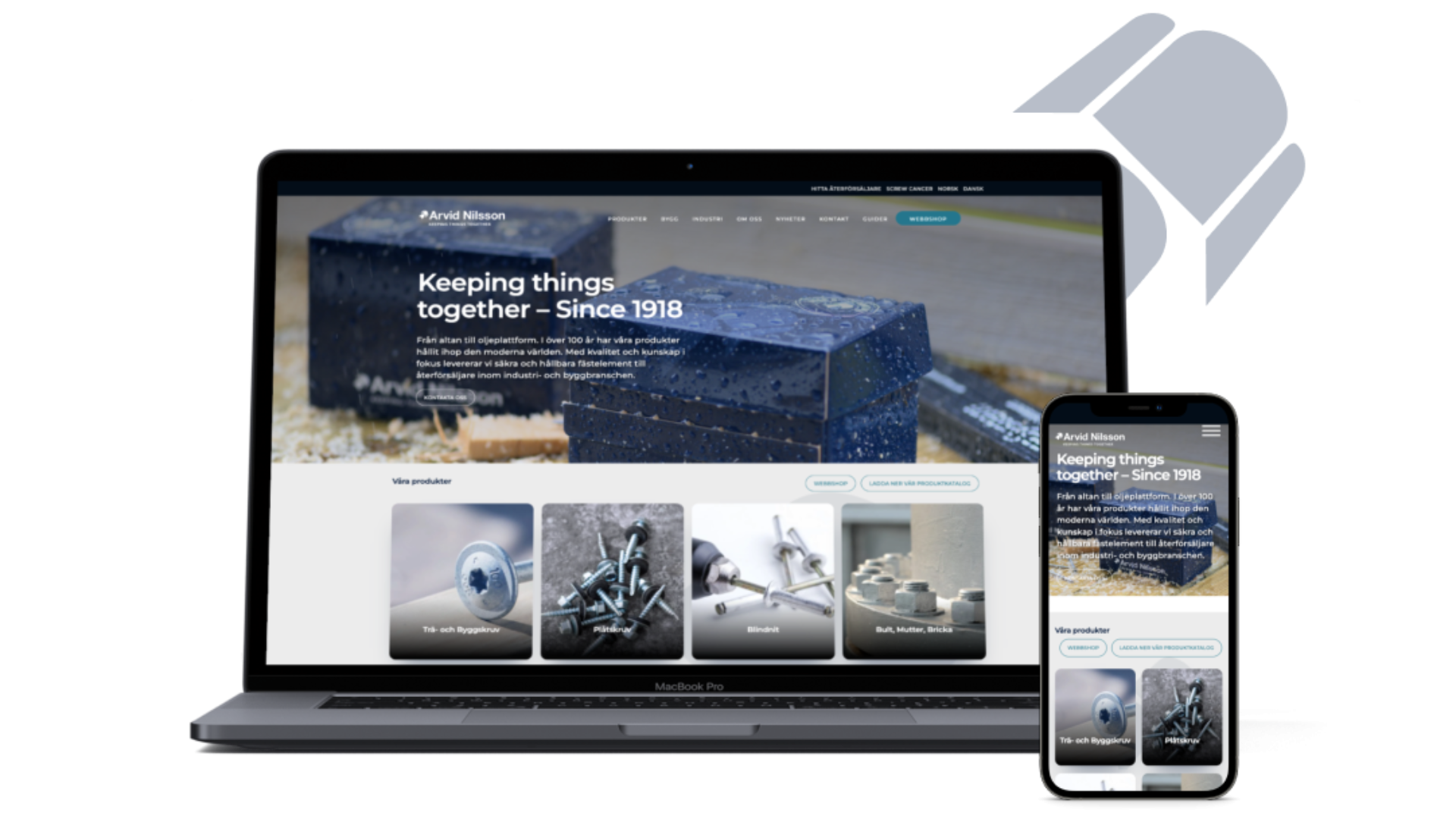
ZenDev implemented a new design and created 20+ custom APIs for communication between the different systems. All changes speeded up indexing,  and what took days before is reduced to 2 minutes now.

Consulting
Web development

scroll-to-top