What is the cost of "good-enough" B2B e-commerce?

the cost of good-enough e-commerce

Trusted by startups and enterprises:


You have a webshop. Your customers can log in. They can browse products. They can place orders.
So what's the problem?


The problem is what happens between the click and the delivery. The manual rekeying. The price that doesn't match what the sales rep quoted. The stock level that was wrong by the time the order hit the warehouse. The new product that took three weeks to go live because someone had to update four systems manually.


"Good enough" e-commerce is expensive. You just can't see the invoice.


The real cost sits in the gaps between systems


Most B2B distributors run their e-commerce platform and their ERP as two separate worlds. Orders come in through the webshop. Someone re-enters them into the ERP. Inventory updates happen on a schedule, maybe nightly, maybe weekly. Customer-specific pricing lives in the ERP but doesn't always reach the website correctly.

75% of B2B companies say their ERP-to-e-commerce integration is only "somewhat effective." That's a polite way of saying humans are the middleware.

Every manual handoff creates delay, errors, and a ceiling on how many orders you can process. One case study showed that proper ERP-e-commerce integration cut a 20-minute order process down to 3 minutes. Order volume jumped 275%, not because demand changed, but because the system could finally handle it.

The math is simple. If your team spends 20 minutes per order and you process 200 orders a day, that's 66 hours of manual work daily. At 3 minutes per order, it's 10 hours. That's 56 hours freed up. Every single day.
 

Your buyers aren't comparing you to other distributors anymore


Most B2B buyers today are millennials and the generation right above them. They grew up with the internet. They've been buying things online for 20 years. Their patience for clunky webshops is zero.


And they're quick to leave. If your checkout is slow, your stock levels are wrong, or your search can't find the right part — they'll buy from someone else. Even if that competitor's parts aren't as good as yours. Because the shopping experience was easier. That's the part most distributors underestimate. You're not just competing on product quality anymore. You're competing on how easy it is to buy from you.


They expect account-specific pricing visible at login. Real stock levels, not "call for availability." One-click reordering from their purchase history. Order tracking without emailing your sales team. Payment terms at checkout, 83% abandon if those aren't there.


70% of B2B purchases will involve digital self-service in some form in 2026. Your buyers prefer placing orders without talking to a rep,  when the experience is accurate and reliable. That last part is the catch. Self-service only works when your webshop reflects your ERP logic. Customer pricing, stock, order rules, approval workflows. If any of that is disconnected, buyers pick up the phone. Or worse: they go somewhere else.


Catalog chaos is bleeding you quietly


If you manage 100,000+ SKUs (and many Nordic distributors do), you know the pain. Each product has dozens of technical attributes, certifications, images, documents. That data lives in your ERP, your PIM (if you have one), your webshop, maybe a print catalog.

60% of distributors report product data inconsistencies across channels. Manual data entry causes up to 30% error rates. 70% struggle to keep catalogs accurate and current.

The symptoms: same product listed differently on your website and in your ERP. Technical specs that don't match. New products taking weeks to appear online. Price updates requiring manual changes across 3-4 systems.

Each inconsistency erodes trust. A buyer who sees wrong stock levels once will call next time instead of ordering online. A buyer who gets the wrong product because of bad data doesn't come back.


The omnichannel illusion


Your customers use 10+ channels during their buying journey. They expect the same pricing, stock data, and order history everywhere.

Most distributors don't deliver this. Not because they don't want to, but because each channel runs on different data. The sales rep knows the negotiated price. The webshop shows list price. The mobile app shows yesterday's inventory.

79% of B2B customers expect consistent interactions across channels. When they don't get it, they call your team to sort it out. That's not a customer service problem. It's a data architecture problem.


What "good enough" actually costs you


Let's put some numbers on it.

Customer-specific pricing that requires a phone call instead of showing up at login? That's a sales rep tied up for 15 minutes on something a system should handle in milliseconds.

Inventory data that's 24 hours stale? That's overselling, backorders, and apology emails.
New products taking 3 weeks to go live? That's 3 weeks of missed revenue on every product launch.
Orders manually rekeyed from webshop to ERP? That's data entry errors, returns, credit notes, and the staff time to fix each one.

Self-service portals that actually work reduce customer service workload by 63%. Buyers with self-service access are 34% more likely to purchase. Distributors using PIM see 25% improvement in operational efficiency.

The ROI isn't theoretical. It's measured in hours saved, errors avoided, and orders that don't need human intervention.


What fixing this actually looks like


This isn't about replacing your ERP or your e-commerce platform. It's about connecting them properly.
Custom APIs between your ERP and webshop that sync pricing, inventory, and order data in real time, not nightly batches. 

A PIM layer (or targeted data flow automation if full PIM is overkill) that gives you one source of truth for product data across every channel. Self-service portals where buyers see their specific pricing, real stock, and full order history without calling anyone. Mobile experiences that work for field buyers and on-site purchasing, not just a responsive website.


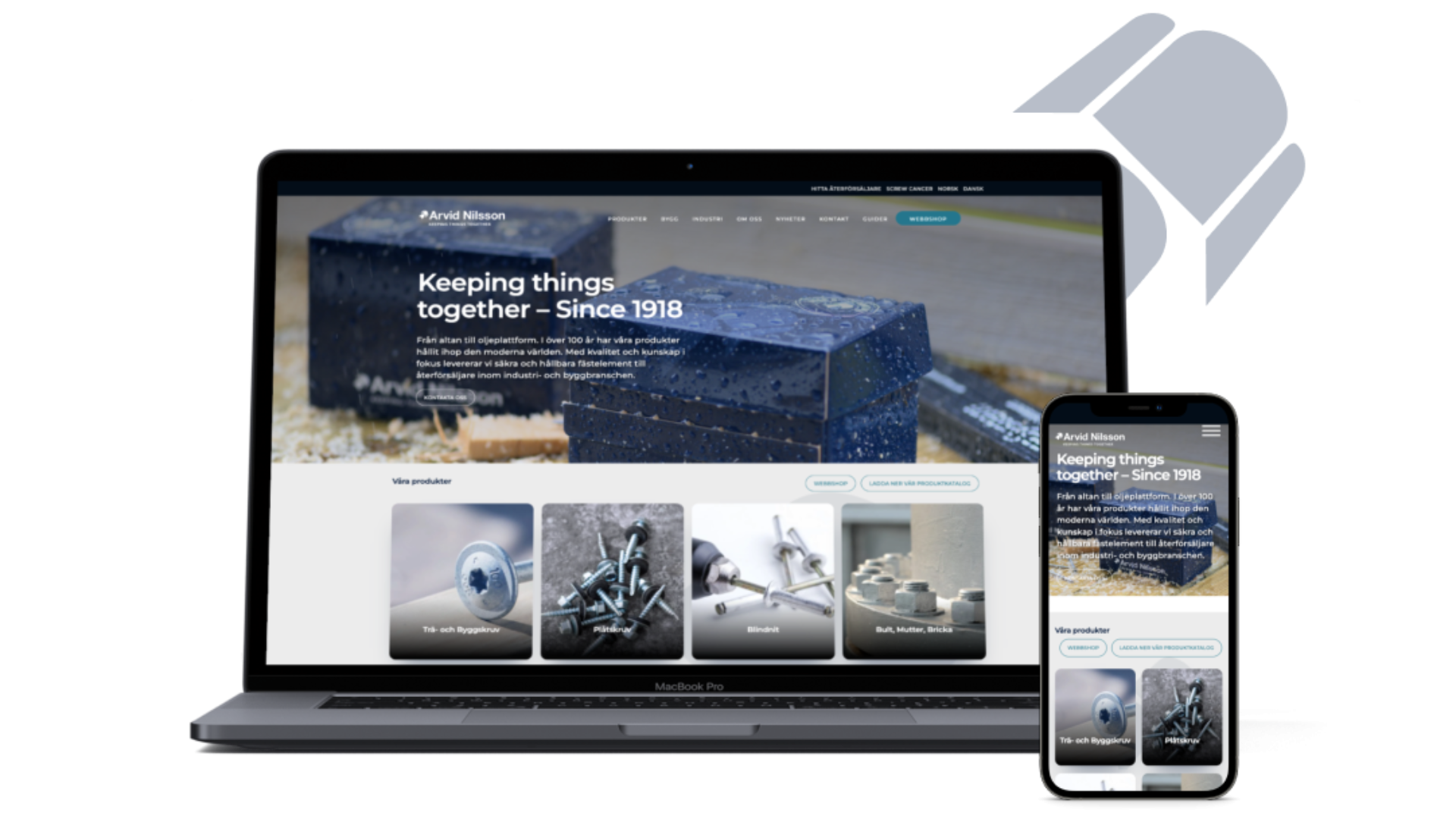
We've done this work. For a Swedish fastener distributor with 100,000+ products, we built 20+ custom APIs connecting their Magento shop to SAP Business ByDesign and PIM C4. 

What used to take days (data imports, ERP syncing) now takes minutes. Live stock updates. Customer-specific pricing pulled directly from the ERP. Pages that load fast because we moved media to Azure Blob storage and rebuilt their search with Elasticsearch.


For one of Sweden's top 3 B2B e-commerce companies, we built their mobile app connected to the main e-commerce platform, implemented automated scaling, and ran continuous A/B testing to improve conversion. Over €30 million in yearly revenue runs through that setup.


This is integration work. APIs, middleware, data pipelines, custom modules. The boring infrastructure that makes everything on the front end actually work.


 

The question isn't "should we upgrade our webshop"


The question is: how much are you spending right now on the manual work between your systems?

Count the hours. Count the errors. Count the customers who call when they should be ordering online.

That's the cost of "good enough."

We're a Swedish-Bosnian software company that connects B2B e-commerce to ERP, PIM, and everything in between. We've been doing it for Nordic distributors for years, and we know what your SAP integration headaches feel like.

If you're curious about what properly connecting your systems would look like for your setup, let's talk. We'll start with your biggest friction point and go from there.

[Let's talk →]

Project

Arvid icon

ZenDev implemented a new design and created 20+ custom APIs for communication between the different systems. All changes speeded up indexing,  and what took days before is reduced to 2 minutes now.

Consulting
Web development

scroll-to-top