Digital product passports are coming for manufacturing. Here's what that actually means.

digital product passports image

Trusted by startups and enterprises:


The EU just gave every product a digital birth certificate. By 2027, batteries over 2 kWh need one. Iron and steel started in 2026. Textiles and aluminium follow in 2027. Electronics, furniture, and construction materials phase in through 2030.


It's called the Digital Product Passport. DPP for short.


If you manufacture anything sold in the EU market, this applies to you. Regardless of where your factory sits.


What a DPP actually is


A DPP is a digital record tied to a physical product. It tracks material composition, carbon footprint, manufacturing origin, recyclability, and repair instructions. Regulators, customers, and recyclers access it through a QR code or NFC tag on the product itself.


This isn't a PDF on a shared drive. It's a live, machine-readable data set that follows the product from production to end-of-life. And it needs to stay accessible even if your company goes under — the EU requires a backup copy through a certified DPP services provider.


The data requirements are specific. Material composition and origin. Carbon footprint per unit. Recycled content percentages. Durability and repairability scores. End-of-life recycling instructions. Third-party verified where required.


Why this is a data problem, not a compliance checkbox


Here's where it gets real for manufacturers.


60-80% of the data required for a DPP comes from suppliers across multiple tiers. Your Tier 1 supplier needs data from Tier 2. Tier 2 needs it from Tier 3. For a battery passport, that chain runs from the cell manufacturer down to the raw material miner.
No single company holds all the data needed for one passport.


Internally, the picture isn't better. Product data lives in your ERP. Environmental data sits in a sustainability tool. Quality specs are in your PLM. Manufacturing parameters live in your MES. Carbon calculations might be in a spreadsheet. None of these systems were built to talk to each other for this purpose.


And remember: nearly half of manufacturing SMBs still manage quality data on paper. Only 28% of industrial firms have implemented a quality management system. The gap between where most manufacturers are and where DPP requires them to be is massive.


The timeline isn't theoretical anymore


The EU's central DPP registry goes live by July 2026. Eight harmonized standards for DPP data and interoperability are expected to be completed this year. The delegated acts defining exact requirements per product category are being finalized now.


For manufacturers dealing in iron, steel, batteries, or automotive components, this isn't a 2030 problem. It's a 2026-2027 problem.


The EU Battery Passport alone requires: carbon footprint declarations, recycled content tracking, state of health monitoring throughout the battery's lifecycle, and third-party verified data on chemical composition. All accessible via QR code. All machine-readable. All audit-ready.


Industry analysts estimate a 12-18 month timeline to establish the necessary data infrastructure. If you haven't started, you're already behind schedule for February 2027.


What this means for your systems


Let's be direct about what DPP compliance requires on the software side.
Data collection across your supply chain. You need a way to request, receive, validate, and store sustainability data from every supplier in your chain. Most suppliers don't have APIs for this. Many still send specs as PDFs or spreadsheets. Someone has to build the pipeline that pulls this data together.


Internal system integration. Your ERP, PLM, MES, and sustainability tools need to feed into a single product data layer. Not a new platform on top: actual connections between the systems you already run. Custom middleware, APIs, and data services that pull product, parts, and environmental data into one view.


Unique product identification. Every unit or batch needs a digital identifier linked to its passport. That means connecting your production tracking to a DPP data system at the point of manufacture. QR codes or NFC tags generated and applied on the production line.


Access control and permissions. Different stakeholders see different data. Regulators get full access. Consumers see sustainability info. Repair technicians get maintenance data. Recyclers get material composition. Your system needs role-based access built in.


Ongoing data updates. A DPP isn't static. When products are repaired, upgraded, or change ownership, the passport updates. This requires software that keeps product records current throughout the lifecycle: not a one-time data dump at manufacturing.


 

The real cost of waiting


No DPP means no EU market access. Full stop. Any product covered by the regulation that doesn't carry a compliant passport can't be placed on the EU market after the relevant deadline.

But beyond market access, there's an opportunity cost. Companies treating DPP as a checkbox will spend more and get less. Companies building proper data infrastructure will end up with something valuable: full visibility into their product lifecycle, supplier chain, and environmental footprint. 

That data feeds into customer audits, CSRD reporting, and the kind of traceability that premium OEM customers already demand.


Where software development comes in


A DPP isn't something you buy off the shelf. The platforms and standards exist, but the hard part is connecting them to your specific production environment, your supplier network, and your existing systems.

That means custom software work:

  • APIs that pull supplier sustainability data into your product records
  • Middleware connecting your MES, ERP, and PLM into a unified data layer
  • Data services that aggregate material composition, carbon footprint, and compliance data per product or batch
  • QR code or NFC integration on your production line, linked to the DPP system
  • Role-based access portals for regulators, customers, and recyclers

This is integration work. The same kind of work that manufacturers need for every challenge in 2026 — connecting legacy systems to modern requirements.

We're a Swedish-Bosnian software development company that builds exactly this kind of infrastructure for Nordic manufacturers. We connect production systems to business tools, build custom data pipelines, and create the middleware that makes old and new systems work together.

Not sure what your systems can already handle and what needs building? That's the first question to answer. We can help you figure it out.

[Get in touch →]

Project

Cargotec

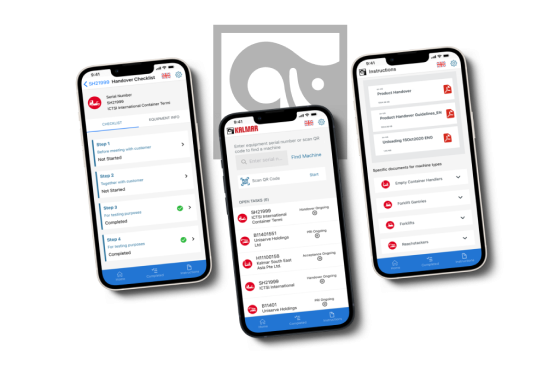
See how Kalmar Cargotec achieved 103% efficiency gains with a custom mobile app. Read the case study & learn more about the solution that supports 17 languages.

Mobile development

scroll-to-top